
Opens in a new tab
Advocating, Educating and Connecting the Jewish Community across South Africa.
Donate Now
Report an Anti-Zionist incident

Naledi Pandor and the Collapse of Moral Leadership at Nelson Mandela University

Campaigns
In the Media
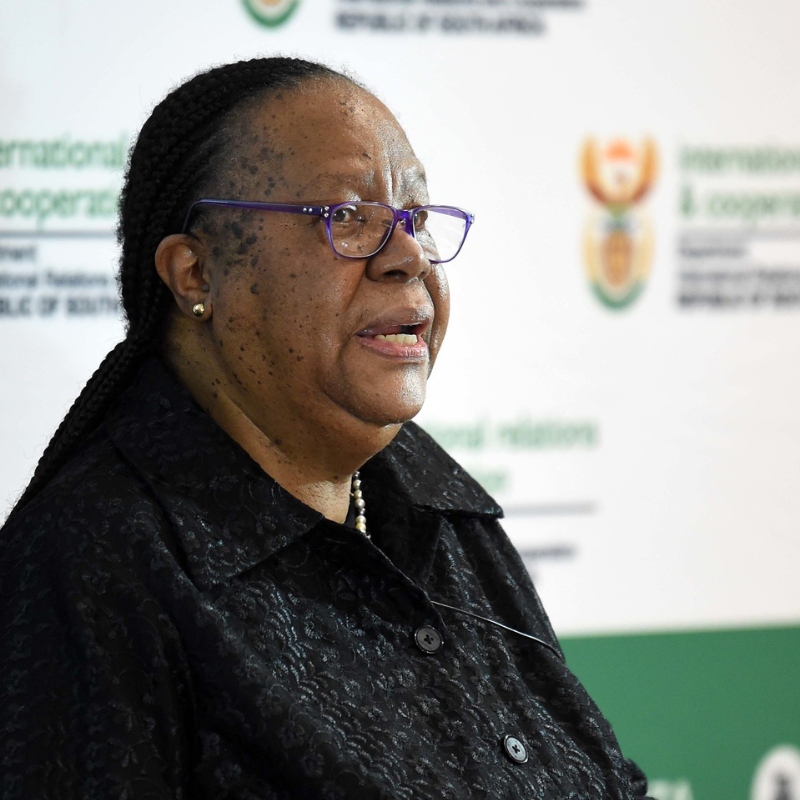
Credit GCIS/Flickr

Johannesburg, South Africa – Naledi Pandor’s appointment as Chancellor of Nelson Mandela University represents a profound failure of judgment and a further erosion of the Mandela name. A chancellor is not merely a ceremonial figurehead. The office exists to embody an institution’s moral authority, to serve as its ethical compass, a custodian of values, and a symbol of judgment, restraint, and integrity.

Measured against that standard, Pandor falls dramatically short.

Her public record is marked by repeated and consequential moral lapses. Just one week after the 7 October 2023 massacre, in which Israeli civilians were murdered, raped, and taken hostage, Pandor phoned Hamas leader Ismail Haniyeh to offer South Africa’s support and solidarity. This was not a gesture of diplomacy or peace-building. It was a choice to extend moral legitimacy to a terrorist organisation at the very moment the scale of its atrocities was becoming clear. Such conduct reflects a collapse of ethical judgment fundamentally incompatible with any role requiring moral leadership.

Her subsequent remarks invoking jihad compounded this failure. Far from academic or neutral, the language she employed drew on terminology long used to justify violence against civilians. When such rhetoric comes from a senior public figure, it carries weight, and it stands in stark contradiction to Nelson Mandela’s legacy of restraint, moral clarity, and respect for human life.

Under Pandor’s leadership, the Nelson Mandela Foundation itself crossed a troubling line by issuing a funding call explicitly aimed at combating Christian Zionism. Framed as a values-based initiative, it was widely criticised for targeting the sincerely held theological beliefs of millions of Christians worldwide and for aligning the Foundation with a politicised campaign to delegitimise Jewish self-determination. This was not bridge-building. It was ideological positioning.

Internationally, Pandor’s conduct has proven equally polarising. The cancellation of her U.S. visa constituted an extraordinary diplomatic rebuke, underscoring how her actions are perceived beyond South Africa’s borders.

Nelson Mandela University should be anchored in ethical authority and sound judgment. Elevating Naledi Pandor to its highest ceremonial office diminishes both. It impinges on the dignity of the institution and treats the Mandela legacy with a carelessness it does not deserve.

A chancellorship should confer honour. In this case, it confers damage.


Photo credit: GCIS/Flickr
Sign Up For Our Newsletter

Get the latest news, events, and initiatives. Be part of a community that stands for Israel and strengthens ties between South Africa and the Jewish homeland.

Name(Required)
Email(Required)
Privacy(Required)
  • Credit GCIS/Flickr

    Naledi Pandor and the Collapse of Moral Leadership at Nelson Mandela University

    {acf_job_title}

    Johannesburg, South Africa – Naledi Pandor’s appointment as Chancellor of Nelson Mandela University represents a profound failure of judgment and a further erosion of the Mandela name. A chancellor is not merely a ceremonial figurehead. The office exists to embody an institution’s moral authority, to serve as its ethical compass, a custodian of values, and a symbol of judgment, restraint, and integrity.

    Measured against that standard, Pandor falls dramatically short.

    Her public record is marked by repeated and consequential moral lapses. Just one week after the 7 October 2023 massacre, in which Israeli civilians were murdered, raped, and taken hostage, Pandor phoned Hamas leader Ismail Haniyeh to offer South Africa’s support and solidarity. This was not a gesture of diplomacy or peace-building. It was a choice to extend moral legitimacy to a terrorist organisation at the very moment the scale of its atrocities was becoming clear. Such conduct reflects a collapse of ethical judgment fundamentally incompatible with any role requiring moral leadership.

    Her subsequent remarks invoking jihad compounded this failure. Far from academic or neutral, the language she employed drew on terminology long used to justify violence against civilians. When such rhetoric comes from a senior public figure, it carries weight, and it stands in stark contradiction to Nelson Mandela’s legacy of restraint, moral clarity, and respect for human life.

    Under Pandor’s leadership, the Nelson Mandela Foundation itself crossed a troubling line by issuing a funding call explicitly aimed at combating Christian Zionism. Framed as a values-based initiative, it was widely criticised for targeting the sincerely held theological beliefs of millions of Christians worldwide and for aligning the Foundation with a politicised campaign to delegitimise Jewish self-determination. This was not bridge-building. It was ideological positioning.

    Internationally, Pandor’s conduct has proven equally polarising. The cancellation of her U.S. visa constituted an extraordinary diplomatic rebuke, underscoring how her actions are perceived beyond South Africa’s borders.

    Nelson Mandela University should be anchored in ethical authority and sound judgment. Elevating Naledi Pandor to its highest ceremonial office diminishes both. It impinges on the dignity of the institution and treats the Mandela legacy with a carelessness it does not deserve.

    A chancellorship should confer honour. In this case, it confers damage.


    Photo credit: GCIS/Flickr